Tan Wei Jie
VBox 887977
Singapore

Fax: +65 31355113
Email: weijie (at) tanwj.com
more...

Entrées

Side Dishes

O-Level/A-Level Private Tuition for Mathematics and Physics

A Singapore-Based Electronic Guidebook for Mathematics

Photography in Singapore by Tan Wei Jie

Sponsored Links

Latest Food Review

Search

As Featured On


Vintage Wines

  • 07Sep

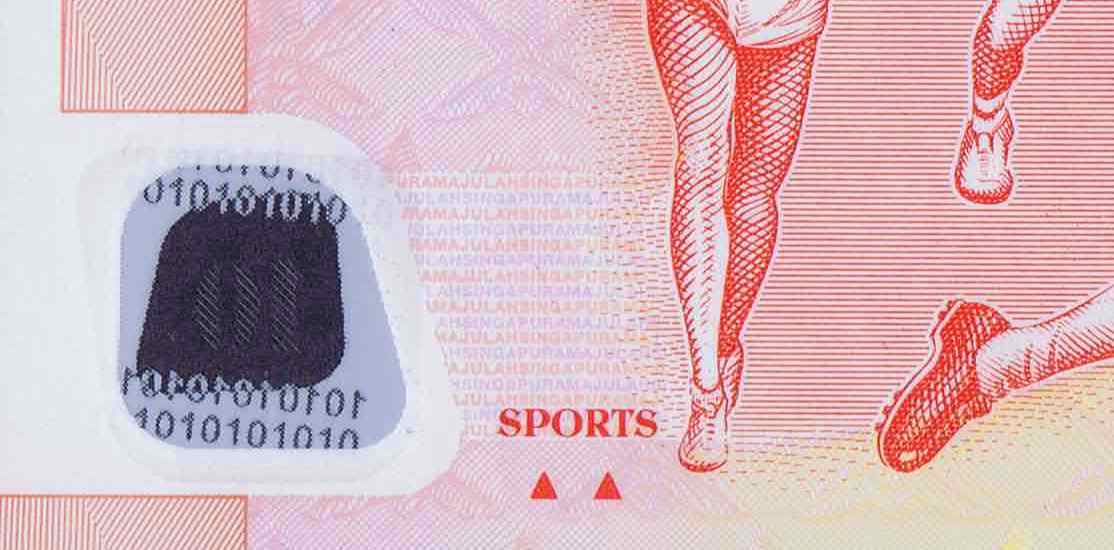
    In a recent auction by Mavin International on 23 July 2011, the Singapore $2 note with two triangles was revealed. However, this variety is only available as an uncut sheet of three. Each uncut sheet contains prefixes 4EQ/4FQ/4GQ or 4HK/4JK/4KK.

    The banknote still bears the signature of the previous Chairman of MAS, Emeritus Senior Minister Goh Chok Tong, instead of the current Chairman, Deputy Prime Minister Tharman Shanmugaratnam. It suggests that the note was printed before the appointment date of 21 May 2011. Banknotes signed by the latter will be expected as early as January 2012.

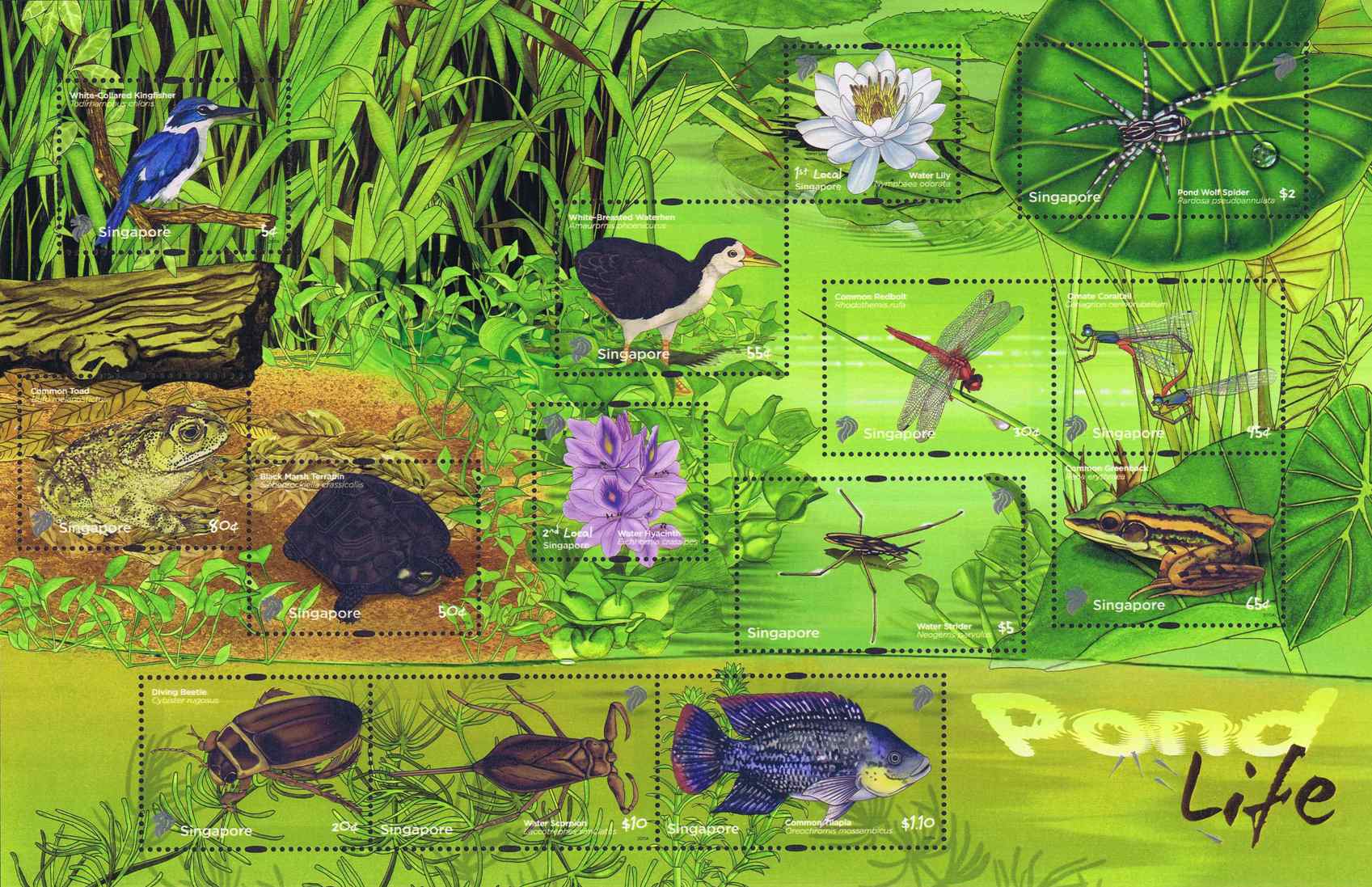
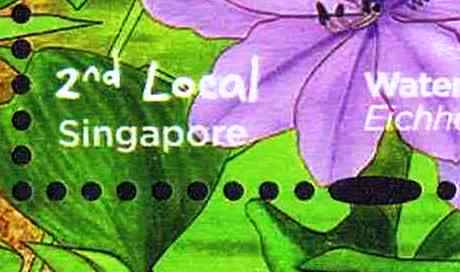
    Also, the Singapore $5 note with one square was available as an uncut sheet of three at the auction. These notes had a prefix of 3AA. The Monetary Authority of Singapore (MAS) has often made such uncut sheets available through auction only.

    Scans by Vincent Tan

    Share the Food:
    • Add to favorites
    • PDF
    • RSS
    • Facebook
    • Twitter
    • del.icio.us
    • LinkedIn
    • Reddit
    • StumbleUpon
    • Technorati
    • email
  • 08Aug

    Today, Singapore Post released a set of four stamps to celebrate 46 years of independence for Singapore. This stamp issue features two residential neighbourhoods Joo Chiat and Taman Jurong – the transformation from the past ($1.10) to the present (50 cents).

    Joo Chiat is a residential conservation area situated between Marine Parade and Geylang in the eastern coastal region of Singapore. Up to 1917, the area was known as Confederate Estate Road, until it was renamed after Chew Joo Chiat (1857 – 1926), a major land owner there. In July 1993, Joo Chiat was gazetted as a conservation district, resulting in the preservation of many of its old buildings. Today, the shophouses and bungalows in Joo Chiat still retain the typical architectural styles of the early 20th century. In February 2011, it was announced to be the first Heritage Town, a project by the National Heritage Board to promote community ownership of heritage.

    Taman Jurong is one of the oldest residential precincts in Singapore. From a sleepy rural area mainly consisting of coastal swamplands fed by many small rivers meandering through the mangroves, jungles and wasteland, it has grown into a developed suburban area today. Taman Jurong was at the heart of industrial growth in the 1960s, providing housing for workers and simple entertainment opportunities. It also led to the development of today’s tourist attractions such as the Chinese Gardens and Japanese Gardens, and Jurong Bird Park.

    Text and Graphics: Singapore Post

    Share the Food:
    • Add to favorites
    • PDF
    • RSS
    • Facebook
    • Twitter
    • del.icio.us
    • LinkedIn
    • Reddit
    • StumbleUpon
    • Technorati
    • email
  • 21Jul

    How much does your meal cost when eating with a group of friends? It’s simple. Launch the built-in calculator app, and push 19 buttons to represent a product of numbers, say 17.90*1.07*1.10*0.9. Hit the equal sign. Voilà! You get 18.96147 and pull out 19 dollars worth of paper money. Pass your phone to the person sitting on your right and start all over again.

    To make this even simpler, we have been developing the CountTip app over the past two months. After entering the amount in five keystrokes, simply tap on any combination of the buttons. This time, you know the answer in eight taps. When you pass the phone around, simply update the subtotal amount and leave the buttons untouched. With real-time calculation implemented, the answer is instantly displayed on the screen.

    Aren’t there already many other tip calculators out there? Yes, there are! However, as of today, none of the apps were really suitable for use in several parts of the world. In Singapore, prices are often subjected to a 7% GST, and some eateries impose a mandatory 10% service levy – either one of them, or both. To make things better, there is a 10% discount if you pay using the preferred credit cards. Many of the existing apps do not allow for a flexible combination of these rates.

    Here are some of the features for CountTip:

    Universal

    This app can be customised according to your local tip, tax or discount rates or when travelling to foreign countries. Storing a custom value is simple. After typing the percentage in the Edit box, tap and hold on one of the buttons for one second. If tipping is not customary, you can use this as a discount calculator by entering negative values such as -10, -15 and -20.

    Built-In Calculator

    Not your typical calculator with the four operators. This calculator comes in handy when you order a main course for 16.90, a drink for 4.80, and a dessert for 5.70. Enter the cost of each individual dish and tap on the + sign to add, rather than launching the calculator app.

    Split the Bill

    If the group decides to split the bill at the end of a meal, simply enter the number of people and pronounce the digits aloud. With this easy-to-use function, who still needs the calculator for division?

    Rounding Off

    Currently, you can choose to round up, round down or to the nearest degree of accuracy, i.e. 0.01, 0.05, 0.10, 0.25, 0.50 and 1.00. To save you some time, choose to round to the nearest dime.

    Why Three Buttons?

    After conducting a brief research, we concluded that restaurants seldom use more than three different rates when calculating the bill. Therefore, we have chosen to display only three buttons to keep the interface clean.


    Currently, CountTip is available for download in the Android Market for Android 2.1 or later.  Download a copy today! Feel free to start a discussion below if you have any suggestions or feedback.


    And finally, to debunk a common myth, it does not matter whether GST, service charge, or discount should come first. The total amount remains the same.

    Share the Food:
    • Add to favorites
    • PDF
    • RSS
    • Facebook
    • Twitter
    • del.icio.us
    • LinkedIn
    • Reddit
    • StumbleUpon
    • Technorati
    • email
  • 10Jul

    Following the article on UV Fluorescent security features on banknotes, people have asked on where to purchase a cheap ultraviolet light source. Shops which sell aquarium products and magic supplies often carry ultraviolet lamps, but be warned that they do not come cheap. A small one can set you back by at least $20, and the cost of a professional-grade aquarium lamp can lie somewhere in the mid-hundreds.

    As a high level of brightness is not required for banknote analysis (unless you intend to use it for your fish tank or card trick), we are introducing you two places where you can purchase a cheap UV torch in Singapore. These sources of ultraviolet light, or black light, are often sold in the form of a battery-operated invisible ink pen, with some as cheap as a dollar each.

    From back: Magic Light Pen ($2), Invisible Magic Pen ($1)

    You can purchase a relatively bright Magic Light Pen from Daiso at $2. It is available in yellow, blue and pink, as far as I am aware. The ultraviolet pen is found in the stationery department and its product code is D-37, No. 299. As this product may not be in stock at times, you are encouraged to visit the larger outlets at IMM or Plaza Singapura or give them a ring to check its availability.

    Alternatively, toy capsule vending machines across the island carry the Invisible Magic Pen. One of them is located next to the provision shop at Outram Park MRT, Exit B. The one-dollar product comes in the form of a keychain. While it is smaller in size, the light source appears to be a tad dimmer. As the products in these vending machines are rotated frequently, call the customer service hotline if you need to locate one.

    When you feel somewhat bored at times, use the pen to write an invisible message!

    Share the Food:
    • Add to favorites
    • PDF
    • RSS
    • Facebook
    • Twitter
    • del.icio.us
    • LinkedIn
    • Reddit
    • StumbleUpon
    • Technorati
    • email
  • 04Jul

    Placing a banknote under ultraviolet light may reveal some interesting security features. To illustrate this, we have chosen four banknotes from different countries.
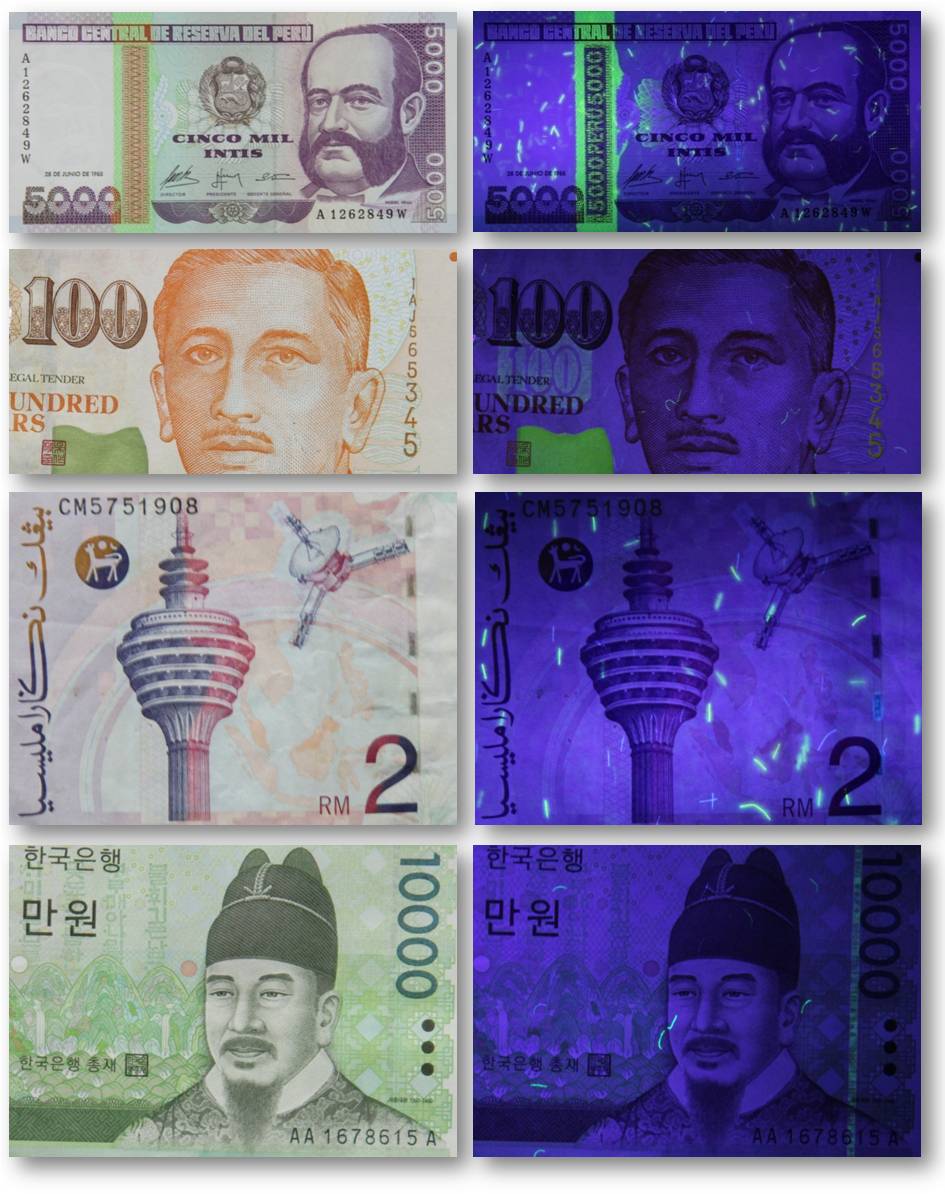
    From top: Peru 5000 Intis (1988), Singapore 100 Dollars (2009), Malaysia 2 Ringgit (1996), South Korea 10000 Won (2007)

    The most commonly used feature is random flecks which glow brightly under ultraviolet light. These flecks cannot be seen under ordinary light and are often incorporated on both sides of the note. In order to provide a greater contrast, such notes are often printed on security paper which does not reflect ultraviolet light. For example, the 5000 Intis (1988) note from Peru and the 2 Ringgit (1996) note from Malaysia are sprinkled generously with fluorescent green and blue flecks.

    Fluorescent security features can be also incorporated with other features on the banknote. On the 100 Dollar (2009) note from Singapore, the latent image bearing the MAS logo fluoresces under ultraviolet light. However, this wavy-shaped feature was not adopted by the polymer banknotes to make way for the island-shaped security thread. A security thread on the right-hand edge of the 10000 Won (2007) note from Korea gives a slight glow when placed under ultraviolet light.

    Fluorescent pigment can also be used to print detailed graphics on the banknotes. The denomination is printed vertically across the 5000 Intis note, while numerals are printed in the middle of the Singapore $100 note. For example, putting a £20 (2007) note under ultraviolet light reveals a bright red and green figure 20. The serial numbers and seal on Singapore banknotes are printed with fluorescent ink.

    Sometimes, these fluorescent features can be seen without using an ultraviolet lamp. For example, the numerals in the middle of Singapore’s Portrait Series of banknotes are large enough to be seen using by holding it next to the window, by means of ultraviolet rays from sunlight.

    Today, many countries make use of such security features to deter counterfeiting, given that it is less easy to reproduce these features using commercially available printers. Often, these features are found on most denominations of modern banknotes. Even the 100 Trillion Dollar (2009) note from Zimbabwe has slight traces of fluorescent fibres embedded on it. Fluorescent features are found on Bank of England’s £5, £10 and £20 notes, and they are likely to be used on the Series F £50 note, to be released in late 2011.

    If you wish to explore the fluorescent features of banknotes, invest in an ultraviolet lamp. This lamp should ideally emit light at 365 nanometres, which is often termed ‘black light’. For a cheaper alternative, visit a novelty store and find pens which allow one to write invisible messages which are revealed under ‘magic’ light. Here, you can purchase one at Daiso for $2.

    Share the Food:
    • Add to favorites
    • PDF
    • RSS
    • Facebook
    • Twitter
    • del.icio.us
    • LinkedIn
    • Reddit
    • StumbleUpon
    • Technorati
    • email